Indra & Vilmantas | A Duet In Colour & Chaos | Winter Expo 2025 – 2026
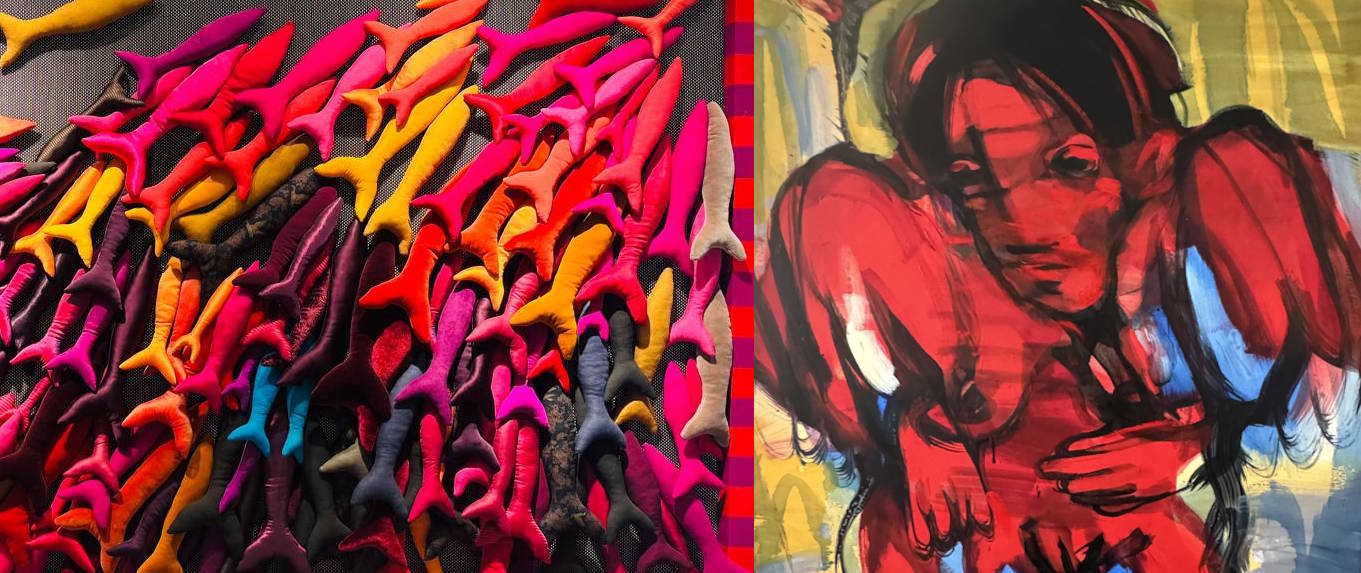
Winter Expo 2025-2026 by Indra & Vilmantas at Louise Gallery.
“A Duet In Colour & Chaos”.
A collab between two Lithuanian artists.
Indra Marcinkevi?ien? & Vilmantas Marcinkevi?ius
Introduction:
Humans run on warmth. Not electricity, not caffeine — warmth. And the works in this exhibition celebrate that essential, slightly chaotic human fuel.
Indra’s pieces erupt with colour and texture. They’re bold, funny, generous, and gloriously tactile — like abstract creatures that want to sit next to you and gossip. Her installations stretch across walls and furniture, turning colour into architecture and comfort into sculpture.
Vilmantas counterbalances this energy with quiet psychological depth. His paintings explore the inner human landscape: the conflicts, myths, moods, and small miracles that shape our daily lives. His translucent layers and luminous tones create portraits that feel both intimate and universal.
Together they form an ecosystem of heat — emotional heat, chromatic heat, human heat. This show is a reminder: warm matter isn’t just material. It’s us.
Patrick Mulders, Louise Gallery
Vilmantas Marcinkevi?ius (1969): BODIES OF PREMONITION
Vilmantas is a Lithuanian painter who seems to have made a long-term pact with colour, emotion, and the slightly surreal. Firmly rooted in neo-expressionism—but happily wandering off the path whenever it suits him—his work mixes emotional realism with psychological storytelling in a way that feels like your subconscious finally decided to speak up… in full technicolour.
His paintings are powered by a bold, luminous palette where colour isn’t just an accessory; it’s the boss. It dictates the mood, rearranges the figures, and occasionally exposes emotional secrets no one agreed to share. His characters often operate as metaphors for the universal human experience: vulnerability, conflict, instinct—and that ever-present feeling that life is a bit strange and we’re all doing our best to pretend it’s normal.
For more than two decades, Vilmantas has built an instantly recognisable artistic language that has spread far beyond Lithuania—especially to Denmark, where he appears to have become a favourite cultural import. His commissions there include portraits of the Royal Family (no pressure), well-known public figures, and large-scale decorative works. Most notably, he created the monumental interior of Hedeager Church, where painting, glass, and architecture come together so harmoniously you’d think they planned it over coffee.
Vilmantas’s work is best described as a neo-expressionist expedition into the human psyche—equal parts story, figure, and colour drama. Each painting becomes a place where emotion, instinct, and intuition collide, inviting viewers into a world where tension and tenderness coexist, and where the inner narrative doesn’t whisper politely—it practically beams at you.
Indra Marcinkevi?ien? (1969): THE COLOUR CONJURER
Indra is one of those rare artists whose personality and work seem to share the same colour palette—bold, layered, a bit mischievous, and always unmistakably hers. People who know her often say she doesn’t just use colour; she practically negotiates with it. And colour usually agrees.
Her textile works and soft sculptures feel like tiny universes packed with emotions, memories, and the occasional visual joke. At first glance they radiate warmth and optimism—serotonin boosters disguised as art objects. But look a little closer, and you’ll notice the shadows, the tensions, and the quiet commentary on life’s less photogenic moments: fear, loss, absurdity. Somehow, she makes even these feel strangely comforting.
Indra’s style has evolved into a kind of joyful monumentalism, where pillows, textiles, and stitched-together forms become emotional maps. Her colours carry meaning—sometimes tender, sometimes cheeky, sometimes sharp enough to leave a mark. Bright yellows, brooding reds, guilty whites: each shade whispers (or shouts) its own story.
Her installations function like open diaries written in symbols instead of words. They’re universal, instantly readable, and occasionally so relatable you wonder if she secretly borrowed your childhood memories.
In short: stepping into Indra’s world feels like entering a place where emotions have textures, colours have personalities, and everyday life—both sweet and painful—gets transformed into something you can’t help but smile at.